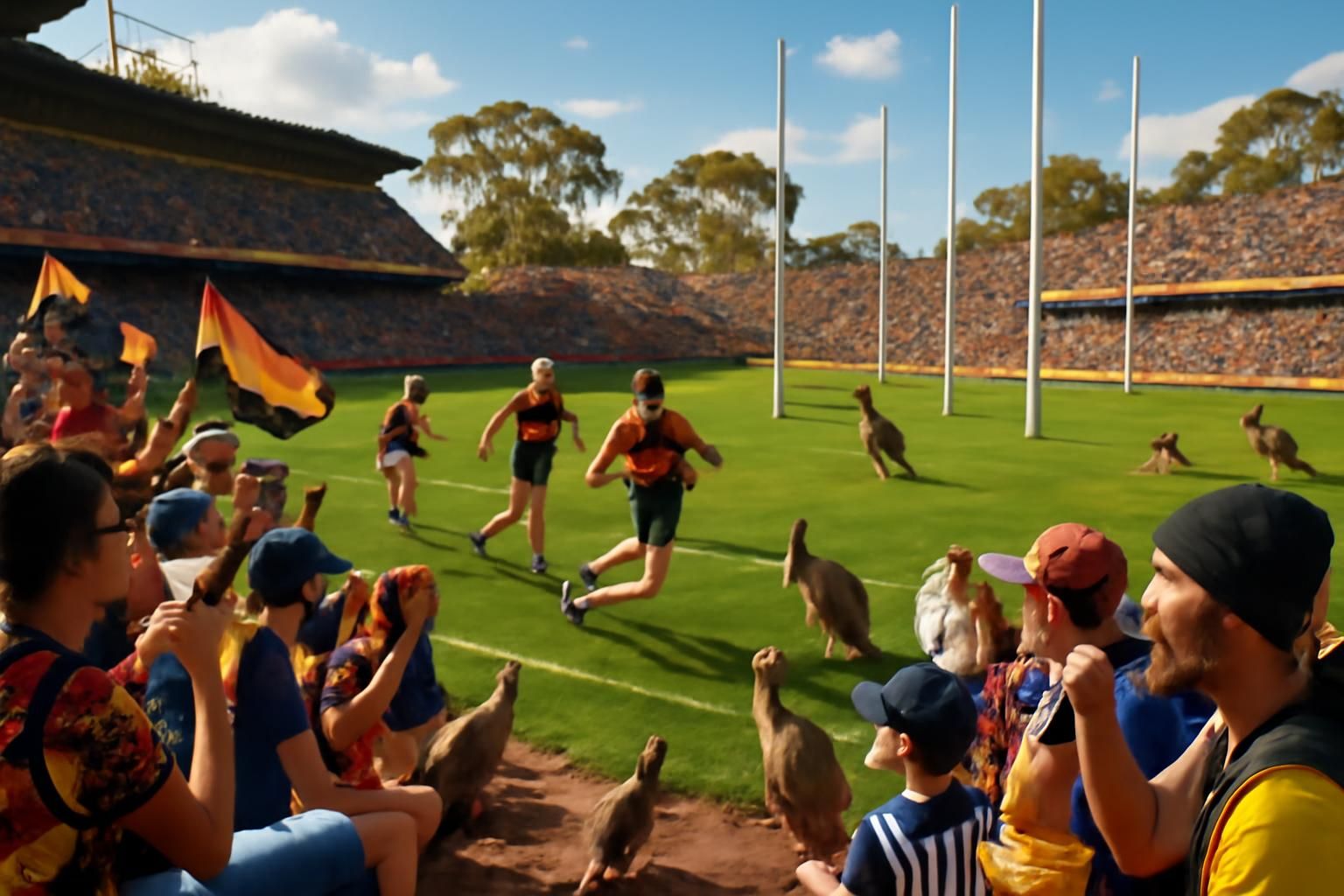
Aussie Rules Football stands as a distinct and powerful symbol of Australian cultural identity, weaving together the nation’s history, social fabric, and sporting passion in a way few other activities can. From the bustling streets surrounding The MCG to remote regional towns, the sport ignites community spirit and unites diverse groups of people through a shared love for a fast-paced game played with an oval ball. The roots of this unique football culture trace back to the mid-19th century, when it was devised as a winter pastime to keep cricketers fit. Since then, it has evolved far beyond its origins to become a nationwide phenomenon celebrated by millions.
This deep cultural fabric isn’t just about the game itself; it embodies traditions, rituals, and values including teamwork, fairness, and respect—elements fostered by the game’s emphasis on physical skill such as marking and strategic use of space. Indigenous influence permeates the sport, bringing rich stories and outstanding talent to the forefront, while grassroots clubs across the country nurture the next generation of players who grow up with the bouncing of the ball in local parks and schoolyards.
Whether it’s the pulse-pounding excitement of high tackles or the camaraderie experienced at local clubs, Aussie Rules Football is engraved into the day-to-day lives of Australians. This article explores the cultural significance, historical evolution, modern-day vibrancy, and social impact of the game, revealing why Aussie Rules remains such a singular and invaluable piece of Australian life.
In Brief:
- Aussie Rules Football originated in Melbourne in 1858 and has since grown into Australia’s leading sport with over 1.5 million participants nationwide.
- Matches attract millions of viewers annually, with the Grand Final at the iconic MCG being a key event in Australia’s cultural calendar.
- The sport emphasizes unique skills such as marking, bouncing the ball, and tactical plays involving high tackles while showcasing strong team spirit.
- Indigenous influence is significant, with over 10% of AFL players identifying as Aboriginal or Torres Strait Islander, enriching the game culturally and athletically.
- The grassroots network of clubs remains the foundation, promoting inclusivity, youth development, and community engagement across urban and remote areas.
- AFL Women’s League (AFLW) has dramatically boosted female participation and widened the sport’s fan base.
- Modern analytics and biometrics are now merging with tradition to shape the sport’s exciting and innovative future.
- Explore the passion and pathways of Aussie Rules Football to understand its profound connection with Australian identity.
The Origins and Evolution of Aussie Rules Football: From Local Roots to National Pride
Aussie Rules Football began as a creative solution in 1858, when Tom Wills and other Melbourne cricketers sought a winter game to keep fit and entertain communities. The very first match, played between Melbourne Grammar and Scotch College, marked the foundation of a sport that distinguished itself immediately with its blend of physicality, speed, and expansive play on an oval ball.
The sport’s rules, initially penned in 1859, combined influences from rugby and Gaelic football to fit uniquely Australian landscapes and sensibilities. Unlike other football codes, Aussie Rules introduced a large, oval-shaped playing field, encouraging fluid movement and aerial contests. This is where the art of marking—catching the ball cleanly after a kick—emerged as a signature skill that defines the spectacle of the game and excites spectators.
By the late 19th century, local competitions flourished, and the Victorian Football League (VFL) was established in 1896, setting the stage for formal competition and national expansion. With the transition from VFL to the Australian Football League (AFL) in 1990, the game evolved beyond its Victorian origins to incorporate powerhouse teams from South Australia, Western Australia, and Queensland, turning it into a truly national spectacle.
The evolution continued with advancements in coaching, athletic training, and facilities, transforming footy into a high-performance sport with a dedicated fan base. Match-day traditions took root during this era, with clubs cultivating strong identities tied to their communities, compelling fans to develop lifelong loyalties.
Historic moments such as the record crowds at the MCG, electrifying Grand Final clashes, and the rise of modern legends have all become embedded in the cultural memory. Currently, the AFL boasts over 14,500 clubs and more than 1.5 million active participants, underpinning the sport’s grassroots strength and future growth.
Understanding the game’s origins and growth helps explain why it resonates so deeply with Australians. The unpredictable yet rhythmic nature of bouncing the ball between teammates, the thrill of a contested high tackle, and the communal celebrations following a spectacular mark or goal collectively define a sport firmly rooted in its cultural heritage but always looking forward.

Footy Traditions and Match-Day Culture: How Aussie Rules Creates Community Connections
Match days in Aussie Rules Football are more than just sporting events—they are dynamic community rituals that foster a profound sense of belonging across generations and neighborhoods. From the pre-game anticipation to post-match celebrations, the culture is thick with customs that encapsulate Australian values and hospitality.
The team spirit palpable in packed stadiums around the country echoes down to suburban grounds, where grassroots clubs host sausage sizzles and local supporter gatherings. Wearing team colors and chanting club songs like “Up There Cazaly” are ritualistic acts expressing loyalty and identity. This communal atmosphere is integral to cultivating lifelong fans and players alike, strengthening social cohesion at every level.
The legendary atmosphere of the Grand Final at the Melbourne Cricket Ground, with its electric crowd surpassing 100,000 spectators annually, stands as a testament to the cultural impact of footy. This pinnacle event is not merely a game but a shared national experience that creates stories passed down across families.
Food and tradition go hand in hand. Meat pies and other local delicacies enjoyed while watching a game on TV or at the oval invoke a powerful sense of nostalgia and tradition. For many, footy is interwoven with Saturday afternoons, community volunteerism, and celebrations marking milestones from junior footy debutants to seasoned veterans.
Local clubs act as hubs for youth development and social engagement, supporting diverse populations including Indigenous communities and newcomers to the country. Programs like NAB AFL Auskick offer structured introductions to the sport for children as young as five, reinforcing community roots.
Language surrounding the game forms its own vibrant lingo. Phrases such as “taking a speccy” (a spectacular mark) and “banana kick” (a curved kick) have moved into everyday Aussie vernacular, cementing the sport’s influence on national culture beyond the oval field.
This cultural heartbeat provides context for how footy operates not only as a sport but as a social glue. The rituals, camaraderie, and passion observed both in major stadiums and local parks showcase Aussie Rules as an enduring, evolving heartbeat of Australian society.
Indigenous Influence in Australian Football: Celebrating Cultural Contributions and Legacy
The story of Aussie Rules Football cannot be told without recognising the vital and longstanding contributions of Indigenous Australians. Indigenous players have shaped and enriched the sport, bringing unique skills, perspectives, and cultural pride that have transformed footy into a platform for both athletic excellence and social progress.
Today, Indigenous players constitute more than 10% of AFL athletes, a figure dramatically above their population share nationally. This strong representation highlights the importance of footy as a cultural avenue for Indigenous communities. Iconic players such as Adam Goodes, Michael Long, and Lance “Buddy” Franklin have become household names, revered not only for their ability but also for their advocacy and leadership within the sport.
The AFL’s commitment to inclusivity and reconciliation is visible through numerous programs and events, including the annual Indigenous Round, where the game celebrates Aboriginal culture through music, dance, and storytelling. These initiatives increase awareness and encourage respect across the broader Australian public.
Grassroots clubs also reflect this commitment by creating welcoming environments supportive of Indigenous youth participation, fostering pathways to professional careers. The representation of Indigenous culture in club emblems, matches, and fan culture enriches the sport’s identity and deepens its community ties.
Beyond the game, the Indigenous influence in Aussie Rules reinforces national conversations about history, identity, and social justice. The arena of footy becomes a microcosm of Australian society, where issues of racism, reconciliation, and respect for cultural heritage are openly confronted and addressed.
The span of Indigenous influence clearly shows that footy is not just about sport but about community, cultural celebration, and national unity. The explosion of Indigenous talent and leadership within AFL signifies a meaningful and positive evolution of Australian football culture.
Modern Stars and Iconic Moments: The Legends Shaping Aussie Rules Football Today
As Aussie Rules Football continues to captivate millions, modern stars have emerged as ambassadors of the sport’s unique character and entertainment value. Players such as Dustin Martin, Nat Fyfe, and Christian Petracca represent a blend of athletic prowess, tactical intelligence, and charismatic leadership that inspire fans nationwide.
Dustin Martin, notably a three-time Norm Smith Medalist, exemplifies the qualities of a modern footy hero: powerful, skilled, and clutch in critical moments. In 2023, his average of 21 disposals per game was pivotal in Richmond’s premiership campaign, enthralling supporters with game-changing plays like spectacular marking and precise kicking.
Historic Grand Finals continue to produce unforgettable moments. The 2018 showdown between West Coast Eagles and Collingwood captivated 100,022 fans, ending with a last-minute goal securing the Eagles’ victory. Such matches highlight the sport’s unpredictable drama and intense contests embedded in its tradition.
Lance Franklin’s career stands out for his goal-scoring records and athleticism. Surpassing 1,066 career goals, Franklin’s legacy resonates in the annals of AFL history as one of the most electrifying forwards. His remarkable skill set provides a template for aspiring players on how physical talent and precision converge.
Younger stars, including Nick Daicos and Caleb Serong, are redefining the game’s future. Daicos’s 31 disposals per game in his sophomore season signal a new era of elite play, while Serong’s versatility exemplifies dynamic athleticism paired with strategic awareness.
These athletes are not just sportspeople; they are cultural icons who carry forward the legacy of Aussie Rules Football, drawing new fans and elevating the game’s profile nationally and internationally. Their stories embody the sport’s ongoing evolution and the powerful role it plays in Australian culture.
Technology and Tactical Innovation: The Future of Australia’s Favourite Sport
The rich tradition of Aussie Rules Football blends seamlessly with cutting-edge technology and evolving tactics, propelling the sport into a new era of sophistication and excitement. Modern teams increasingly rely on GPS tracking, biometric data, and even drone footage to analyze player performances and refine strategic game plans.
Through these technologies, coaches can monitor players’ speed, endurance, and impact during matches, enabling tailored training programs to optimize fitness and reduce injuries. Tactical coaching now involves precise positioning and timing to exploit opportunities created by fast ball movement, strategic bouncing, and coordinated pressure during contested moments like high tackles.
This integration of data analytics increases the pace of the game and enhances viewer engagement, allowing fans to appreciate the nuances of team strategies and individual brilliance. Despite these advances, the physical intensity and unpredictability of footy remain intact, preserving the sport’s core excitement.
Furthermore, the AFL’s embrace of technology extends beyond teams to fan experience and media coverage, with real-time statistics, interactive commentary, and virtual platforms offering new ways to connect with the game worldwide. This modernization is critical for footy’s growth in an increasingly digital global landscape.
This fascinating interplay between tradition and innovation ensures Aussie Rules Football remains a thrilling spectacle and a sport poised for continued cultural and commercial success.
Grassroots Clubs and Youth Development: Building the Heartbeat of Aussie Rules Football
Underlying the spectacle of elite footy is a sprawling network of grassroots clubs that cultivate passion, skills, and community values from the ground up. More than 14,500 clubs across Australia serve as incubators for talent and hubs of social engagement, shaping the sport’s future.
Programs such as NAB AFL Auskick play a critical role in introducing over half a million children each year to the fundamentals of the game. By focusing on teamwork and basic skills, these initiatives offer positive experiences that foster lifelong connections to footy.
Schools increasingly integrate Aussie Rules Football into physical education, creating structured pathways to the AFL through sports academies like Maribyrnong Sports Academy. Scholarships and professional training provided by these institutions help young athlete transitions from local competitions to state and national leagues.
In addition to fostering athletic development, grassroots clubs prioritize inclusivity. Dedicated leagues for girls, multicultural communities, and players with disabilities ensure that footy reflects Australia’s diverse society. Currently, over 30,000 girls play regularly, supported by almost 220,000 volunteers who contribute invaluable time and energy, representing an unpaid labor contribution exceeding $2.5 billion annually.
This volunteer spirit is as essential as the physical skills on display; it embodies the collective heart and soul of Aussie Rules. Grassroots clubs cultivate friendships, leadership skills, and a sense of belonging that ripple far beyond the playing field, strengthening the sport as a cultural institution.
| Grassroots Program | Participants (2023) | Focus | Impact |
|---|---|---|---|
| NAB AFL Auskick | 560,000+ | Basic skills, teamwork for kids 5-12 | Strong youth engagement and foundational skill development |
| Maribyrnong Sports Academy | Several hundred annually | Elite training and scholarships | Pathway to professional football |
| AFL Inclusion leagues | Thousands | Players with disabilities | Promoting inclusivity and access |
| Girls’ Football Leagues | 30,000+ | Female participation and competition | Gender equity and new fan base growth |
Regional Differences and Rivalries: How Aussie Rules Shapes Local Identities
While Aussie Rules Football commands national attention, distinct regional cultures and rivalries give the sport vibrant diversity. The game is most popular in Victoria, South Australia, Western Australia, Queensland, and Tasmania, where state-based traditions and loyalties remain deeply rooted.
For example, Victorian clubs such as Collingwood and Richmond carry decades of passionate followings, with their fierce derbies celebrated as much for local bragging rights as for the sport itself. Similarly, in Western Australia, the rivalry between the West Coast Eagles and Fremantle Dockers captures the imagination of local supporters and contributes significantly to the state’s sporting culture.
The MCG remains the symbolic heart for Victorian football, hosting key matches that draw crowds from around the nation, but each state brings unique atmosphere and customs to their games. South Australia’s Adelaide Oval, for example, is famed for intimate crowd interactions and community celebrations that differ from the vast scale seen in Melbourne.
These regional rivalries are not just geographic but cultural, reflecting historical migration patterns, economic shifts, and political identities that are reinforced on the football field. The intensity of these contests, especially during State of Origin Games and key Grand Final matchups, underscores Aussie Rules’ role in both uniting and celebrating Australia’s diversity.
Understanding these nuances reveals why footy remains more than a sport. It is a mirror reflecting the complexity of Australian society and a medium through which communities express pride, resilience, and connection.
The Global Reach of Aussie Rules: Growing Popularity Beyond Australian Borders
Though distinctly Australian, Aussie Rules Football has been steadily gaining traction internationally. Expatriates, amateur clubs abroad, and broadcasting efforts have helped spread the game to countries such as the United States, Canada, Ireland, and beyond.
One of the unique challenges is the sport’s reliance on the large oval field and complex rules, which contrast with the rectangular fields of rugby and soccer more common globally. However, international matches and tournaments organized by the AFL and affiliated bodies help build enthusiasm by showcasing the sport’s thrilling plays and cultural storytelling.
Efforts to globalize footy also include youth development programs and coaching clinics overseas, particularly targeting multicultural communities. Digital platforms offer live-streaming options and educational content that introduce international audiences to the sport’s intricacies, from bouncing the ball to mastering tactical kicks and boundary line play.
For Australians living abroad or new fans discovering the game, resources such as how to follow AFL from overseas provide pathways to stay connected and engaged, highlighting a growing global footy community.
While Aussie Rules Football remains firmly embedded in Australia’s identity, its expanding international footprint reflects a sport with a remarkable ability to captivate hearts and minds far beyond its birthplace.
What makes Aussie Rules Football different from rugby or soccer?
Aussie Rules is played on a large oval field with 18 players per side. It combines elements of football, rugby, and soccer but features unique skills like marking, bouncing the ball during runs, and a distinctive scoring system. Its fast pace and physicality set it apart from other codes.
How important is Indigenous culture to Aussie Rules Football?
Indigenous culture plays a vital role, with over 10% of current players identifying as Indigenous Australians—a higher proportion than their population share. The sport celebrates Indigenous heritage through special rounds, cultural programs, and the significant contributions of Indigenous players to the game’s history.
What role do grassroots clubs play in Australian football culture?
Grassroots clubs are the foundation of Aussie Rules. They nurture young talent, foster community connections, and support inclusivity. Volunteers at this level contribute millions of dollars in value annually, emphasizing that footy is not only a professional sport but an essential part of Australian community life.
How has technology changed the way the game is played?
Modern technology like GPS tracking and biometric monitoring has enabled more precise player performance analysis and injury prevention. Tactics have evolved, making the game faster and more strategic, while fan engagement has been enhanced with real-time stats and digital content.
How is the AFL Women’s League impacting football culture in Australia?
The AFLW has expanded opportunities for female players and fans, growing the sport’s inclusivity and diversity. Since its 2017 inception, the league has expanded national visibility of women’s footy, encouraging greater participation and breaking down traditional gender barriers in Australian sport.