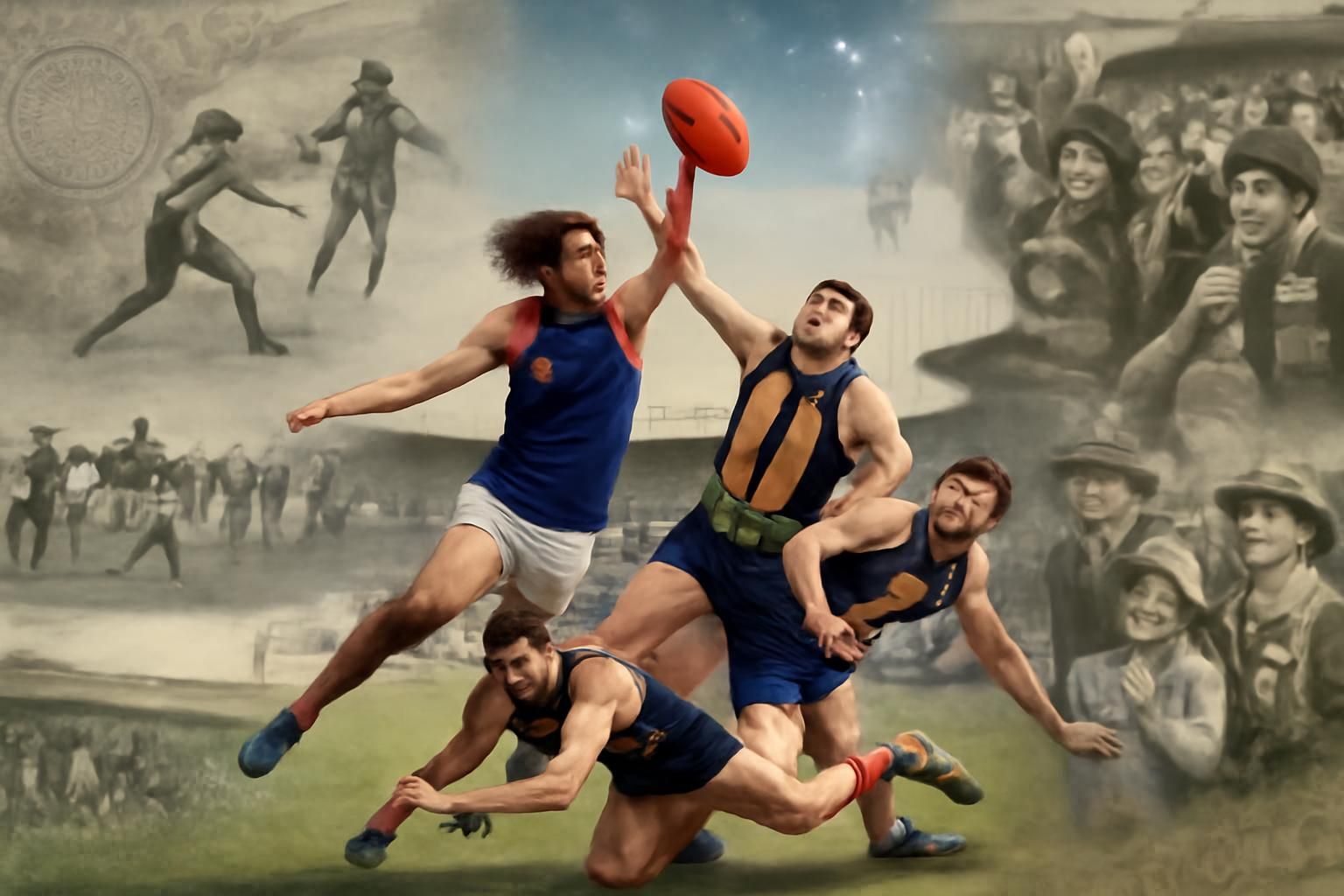
Australian Football, commonly called “footy” by locals, is far more than just a sport; it is a deep-seated thread woven into the fabric of Australian society. Emerging in the 1850s in Victoria, this exhilarating game has grown to become a vital cultural institution, captivating the hearts and minds of millions. From its early origins as a regional pastime to the formation of the Australian Football League (AFL), the sport’s journey mirrors the broader narrative of Australia’s national identity. The AFL, now a professional powerhouse, embodies a unique sporting tradition that transcends mere competition, fostering community spirit, social cohesion, and cultural celebration.
Beyond the game itself, Australian Football has sparked significant social change, prominently championing Indigenous representation and gender equality through the introduction of the AFL Women’s league. It is a sport that unites diverse communities, inspiring grassroots programs and promoting health and wellbeing nationwide. Each year, iconic events like the AFL Grand Final at the Melbourne Cricket Ground become emblematic moments of unity and pride, drawing people together from all walks of life. Understanding this rich history sheds light on the enduring cultural impact of Australian Football and its role in shaping modern Australian society.
Key Insights:
- Australian Football dates back to the 1850s and quickly grew from a Victorian pastime to a national sport of immense popularity.
- The Australian Football League (AFL) is central to Australia’s sporting culture, shaping national identity and community cohesion.
- Indigenous Australians have played a key role in the sport, and the AFL promotes reconciliation and cultural respect.
- The introduction of the AFL Women’s (AFLW) competition has advanced gender equality in Australian sport.
- The sport’s grassroots presence sustains community spirit and encourages healthy lifestyles across the country.
- Australian Football’s annual events and traditions celebrate historical and cultural Australian values.
- The AFL generates significant economic impact, creating jobs and boosting local economies.
The Origins and Early Development of Australian Football
The origins of Australian Football can be traced to Melbourne in the late 1850s, a period when the colony was experiencing rapid growth and transformation due to the gold rush. The game’s creation is often attributed to Tom Wills, an influential figure who, after learning rugby and cricket in England, sought to develop a uniquely Australian game suitable for the winter months. This new football style evolved incorporating elements suitable to the expansive oval fields common in Australia, setting it apart from the rectangular pitches of rugby and soccer.
The first official rules were drafted in 1859 by the Melbourne Football Club, making it one of the oldest codified football games globally. The sport quickly gained popularity, spreading from Victoria to other Australian states by the 1870s, establishing itself within local communities. Early matches reflected informal social gatherings but laid the groundwork for a more structured competition system.
During these early years, Australian Football distinguished itself with distinctive features like high marking, a fast-paced playing style, and the large oval field, which catered to Australia’s unique sporting culture. The game was also notable for its inclusive approach, drawing players from diverse backgrounds and engaging Indigenous Australians, who had a long tradition of football-like games before European settlement.
By 1897, the establishment of the Victorian Football League (VFL) marked a new era, transitioning Australian Football into a professional sport. The VFL, later rebranded as the AFL, orchestrated the sport’s expansion nationally, significantly shaping the game’s evolution. This foundational period is essential to understanding how Australian Football embedded itself into the cultural fabric of the nation and laid the foundation for its widespread appeal.

Australian Football as a Mirror of National Identity and Unity
Australian Football is widely regarded as a mirror reflecting the country’s evolving national identity. The sport’s growth as a popular pastime coincided with Australia’s federation in 1901, reinforcing a collective identity among Australians despite their diverse origins.
The AFL Grand Final, now one of the most significant annual sporting events in Australia, encapsulates this spirit of unity. Held at the Melbourne Cricket Ground, the grand final attracts hundreds of thousands of spectators, both in attendance and via broadcasts, uniting fans from across the country. It is often likened to the Super Bowl in the United States for its cultural prominence.
This event transcends sport, serving as an annual celebration of Australian values such as mateship, perseverance, and community spirit. Iconic moments from grand finals frequently enter the national lexicon, with players remembered as national heroes. The progression of the game from a local activity to a national spectacle reveals how Australian Football functions not simply as entertainment but as an essential expression of what it means to be Australian.
Moreover, the AFL acts as a social equalizer. Regardless of socioeconomic background, people from rural towns to urban centers rally behind their teams, creating a shared sense of belonging and pride. The sport also mirrors Australia’s multicultural landscape, embracing players and fans from diverse ethnicities and cultures, further cementing its role in shaping a unified national identity.
Indigenous Influence and Reconciliation Through Australian Football
One of the most compelling aspects of Australian Football’s cultural impact is its relationship with Indigenous Australians. Indigenous players have long contributed to the sport, with many becoming iconic figures thanks to their extraordinary skill and leadership. The AFL is recognized globally for its efforts to promote Indigenous representation, cultural respect, and reconciliation.
The annual Sir Doug Nicholls Round is a celebrated event dedicated to acknowledging Indigenous culture, heritage, and contribution to the sport. Named after one of the early Indigenous football pioneers and a community leader, this round includes cultural performances, traditional ceremonies, and moments of education for fans. It significantly raises awareness around Indigenous issues and fosters a sense of reconciliation within the broader Australian community.
Prominent Indigenous players like Adam Goodes and Cyril Rioli have used their platforms to advocate for social justice and equality, becoming role models for both Indigenous and non-Indigenous Australians. Their narratives extend beyond the sport, symbolizing broader struggles and achievements within the country’s journey toward racial harmony and inclusion.
Grassroots programs supported by the AFL further encourage Indigenous youth participation, nurturing talent while promoting educational and health initiatives. These efforts underline the AFL’s commitment to fostering learning environments that honor Indigenous identity and history within the sport, influencing the wider cultural landscape.
Economic and Social Contributions of the AFL to Australian Communities
The AFL is a significant economic engine within Australia, contributing billions to the national economy annually through ticket sales, broadcasting rights, merchandising, and tourism. The economic influence stretches far beyond the professional level, impacting local communities through job creation and community development.
Major AFL events like the Grand Final drive substantial tourism revenue, bringing visitors from interstate and overseas and boosting hospitality, transport, and retail sectors. This influx is vital for local economies, particularly in Melbourne, where much of the league’s activity is centralized.
Moreover, the AFL’s extensive network of grassroots clubs serves as a foundation for community engagement. These clubs, scattered across urban, suburban, and rural areas, provide a hub for social interaction and lifelong friendships. Participation pathways at the junior and amateur levels foster social inclusion and physical fitness, helping mitigate issues like youth disengagement, mental health challenges, and social isolation.
Community-based AFL initiatives often support charitable causes and local events, further enhancing the league’s positive social footprint. The sport’s accessibility and cultural significance make it an effective tool for bringing together diverse groups, promoting social cohesion, and addressing community needs in a uniquely Australian context.
The Evolution and Cultural Significance of AFL Women’s League
The launch of AFL Women’s (AFLW) in 2017 marked a transformative chapter in Australian Football history, reflecting broader societal shifts toward gender equality and inclusivity in sport. The league has grown rapidly in popularity, providing a professional platform for female athletes and inspiring a new generation of players and fans.
Before AFLW’s establishment, women played community-level football but lacked national exposure and professional opportunities. AFLW has changed this, elevating women’s football to unprecedented visibility and respect. Attendance figures and broadcast ratings have soared, demonstrating not only the popularity of the game but the public’s appetite for diverse representation in sport.
The AFLW has had broad social implications, influencing perceptions of women in sport and encouraging young girls across Australia to pursue their athletic ambitions. Role models emerging from AFLW, such as Erin Phillips and Tayla Harris, challenge traditional gender norms and showcase powerful narratives of resilience and excellence.
The league’s success also led to increased sponsorship deals and media coverage, creating sustainable career pathways for female players. AFLW is now a key component of Australian Football’s cultural landscape, contributing to the sport’s national identity and ongoing evolution.
Grassroots Development and the Popularity of Australian Football Nationwide
Australian Football’s popularity is sustained by a strong grassroots foundation. Local clubs and youth programs maintain active participation levels across the country, ensuring the sport’s vitality and longevity. These grassroots institutions promote technical skills, sportsmanship, and community involvement from an early age.
Government and AFL-backed initiatives invest heavily in school programs and development academies, providing access to coaching and resources, particularly in regional and Indigenous communities. This inclusive approach nurtures talent and fosters lifelong engagement with the sport.
As of 2026, Australian Football remains one of the most-watched and played sports in Australia, with millions of active participants and passionate supporters. Its distinctive blend of athleticism, strategy, and camaraderie resonates with Australians, reinforcing the sport’s place as a cultural cornerstone.
Participation extends beyond males, with women’s involvement increasing steadily through AFLW and local women’s leagues, evidencing the sport’s adaptive growth and expanding appeal. The sport’s accessibility and community focus ensure its enduring popularity and cultural relevance for generations to come.
| Aspect | Impact on Australian Football | Cultural Significance |
|---|---|---|
| Origins and Foundation | Established rules and unique playing style in 1859 | Symbolizes Australian innovation and sporting distinctiveness |
| National Identity | AFL Grand Final as a unifying event | Reflects mateship, community spirit, and national pride |
| Indigenous Influence | Indigenous players and cultural rounds | Promotes reconciliation and diversity recognition |
| Economic Contributions | Revenue generation and job creation | Boosts local economies and community development |
| Women’s AFL | Introduction of professional female league in 2017 | Advances gender equality and broadens sport’s appeal |
| Grassroots Participation | Vast network of local clubs and youth programs | Ensures sport’s continuity and social inclusion |
Traditions and Cultural Celebrations in Australian Football
Tradition plays a pivotal role in the cultural landscape of Australian Football. Events such as the ANZAC Day clash, an annual match honoring Australian and New Zealand armed forces, blend sporting competition with national remembrance. These fixtures are marked by solemn ceremonies, acknowledgments of service, and community participation, highlighting the sport’s role in preserving and celebrating Australian heritage.
Other traditions include club rivalry matches, heritage rounds, and community celebrations that forge deep connections between fans and their teams. The AFL’s commitment to maintaining these customs ensures a continuous link between past and present, enriching the sport’s cultural resonance.
Such rituals foster identity and pride, encouraging fans to embrace not only their team’s colors but also the shared history and values underpinning Australian Football. Through these celebrations, the sport becomes a living museum of Australian culture, reminding participants of their collective story and responsibilities.
The Media, Entertainment Value, and Role Models in Australian Football
The AFL occupies a commanding presence within the Australian media and entertainment landscape. Broadcast rights for games are among the most lucrative in Australian sports, reflecting the widespread appetite and devotion of fans nationwide. Media coverage spans live broadcasts, commentary shows, analysis, and documentaries, ensuring the sport’s stories reach a broad audience regularly.
Players are often elevated to celebrity status, becoming role models beyond the field. Their personal stories of dedication, triumph over adversity, and community involvement resonate widely, inspiring young Australians from diverse backgrounds. This phenomenon helps cement the AFL as not only a game but as a cultural institution fostering positive social influence.
The AFL actively promotes social campaigns focusing on mental health, diversity, and anti-discrimination, underscoring its commitment to societal wellbeing. This intersection of sport, media, and social responsibility positions Australian Football as a multi-dimensional force within the country’s cultural ecosystem.
How did Australian Football originate?
Australian Football began in Melbourne in the late 1850s, with the first official rules formulated in 1859 by the Melbourne Football Club. It was designed to be a unique sport suitable for Australian conditions, incorporating elements from rugby and other football codes.
What role does Indigenous culture play in Australian Football?
Indigenous Australians have greatly influenced the sport, both historically and today. The AFL promotes Indigenous culture through events like the Sir Doug Nicholls Round, Indigenous player representation, and grassroots programs supporting reconciliation and cultural awareness.
What significance does the AFL Grand Final hold?
The AFL Grand Final is a central national event in Australia, symbolizing unity, community spirit, and national pride. It is one of the most attended and viewed sporting events in the country, comparable to the Super Bowl in the United States.
How has the AFL Women’s League changed Australian Football?
Since its inception in 2017, AFL Women’s has dramatically increased female participation and visibility in the sport, promoting gender equality and inspiring future generations of female athletes across Australia.
Why is grassroots football important for the sport’s future?
Grassroots football sustains the popularity and health of Australian Football by encouraging participation from a young age, fostering community ties, and nurturing future talent across all demographics and regions.